


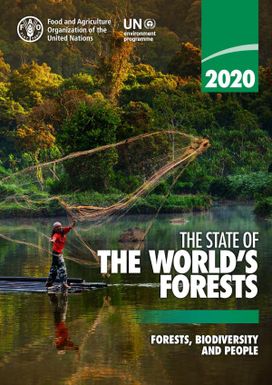


The State of the World’s Forests 2020
- Description:
- Forests harbour most of Earth’s terrestrial biodiversity. The conservation of the world’s biodiversity is thus utterly dependent on the way in which we interact with and use the world’s forests. Forests provide habitats for 80 percent of amphibian species, 75 percent of bird species and 68 percent of mammal species. About 60 percent of all vascular plants are found in tropical forests. Mangroves provide breeding grounds and nurseries for numerous species of fish and shellfish and help trap sediments that might otherwise adversely affect seagrass beds and coral reefs, which are habitats for many more marine species.
- Display date:
- 2020
- Location:
- Worldwide
- Collections:
- Secretariat of the Pacific Regional Environment Programme (SPREP)
- Publisher:
- Food and Agriculture Organization (FAO), United Nations Environment Program(UNEP)
- Content partner:
- Secretariat of the Pacific Regional Environment Programme (SPREP)
- Availability:
- Not specified
-
 Copyright status: All rights reservedFind out more about what you are able to do with this itemThis item is all rights reserved, with means you'll have to get permission from Secretariat of the Pacific Regional Environment Programme (SPREP) before using it. For more information, please see our use and reuse page.What can I do with this item?
 Non-infringing useNZ copyright law does not prevent every use of a copyright work, and this item may be hosted by an international institute or organisation. You should consider what you can and cannot do with a copyright work.
 No sharingYou may not copy and/or share this item with others without further permission. This includes posting it on your blog, using it in a presentation, or any other public use.
 No modifyingYou are not allowed to adapt or remix this item into any other works.
 No commercial useYou may not use this item commercially.
Related items
Welcome and warm Pasifik greetings
The information on this site has been gathered from our content partners.
The names, terms, and labels that we present on the site may contain images or voices of deceased persons and may also reflect the bias, norms, and perspective of the period of time in which they were created. We accept that these may not be appropriate today.
If you have any concerns or questions about an item, please contact us.