Ke mauaka taku Gagana Tokelau i taku aganuku - My language is enriched and sustained by my culture
The theme for 2026 Tokelau Language Week, "Ke mauaka taku gagana Tokelau i taku aganuku”– My language is enriched and sustained by my culture," highlights the importance of preserving and strengthening our language through everyday action. Language and culture cannot exist separately. The more we practise our culture, share our stories, and speak our language, the stronger our identity becomes.
Mālo ni. Ko toku ingoa ko Elekana Laumua.
Ko toku matua ko Sene Laumua mai Atafu, ma toku tamana Silaumua Silaumua mai Fakaofo. Ko oku tupuna ko Uaina ma Sami, ma Tausisi ma Ioane.

[Author - Elekana Laumua]
I was born in Porirua, Wellington, New Zealand, and raised in Mount Druitt, Sydney, Australia. I currently serve as the Director of Media for Tuluma Inc., co-own Young Achievers Clothing, and work as a freelance videographer under the name Shotbykana.
I grew up in the Tokelauan culture, learning from my grandparents, parents, and the church community. Although I was exposed to Te Gagana Tokelau from a young age, it was caring for my mother that truly strengthened my commitment to learning the language. Speaking with her fluently gave me the opportunity to practise, improve, and understand the value of our language.
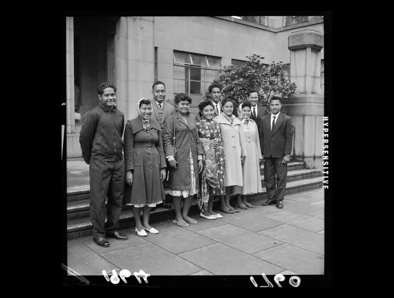
The second group of government-assisted migrants from Tokelau to arrive in Wellington, 1964: from left, Lele Tanu, Susana Lemisio (née Perez), Eneliko Tovio, Hinalagi Maka, Ianeta Baker (née Tinielu), Lui Tufala, Kailua Teilo, Filika Tato (née Lomano), Akileo Manuele and Savelio Lomano.
Image credit: New arrivals from Tokelau, Wellington, 1964 by an Evening Post staff photographer. Ref: EP/1964/1760-F Alexander Turnbull Library.
My grandparents were among the early wave of Tokelauan migrants who arrived in New Zealand during the 1960s. They were founding members of the Matatuala Tokelau community in Porirua before eventually moving to Sydney in search of new opportunities and a better life for their family.
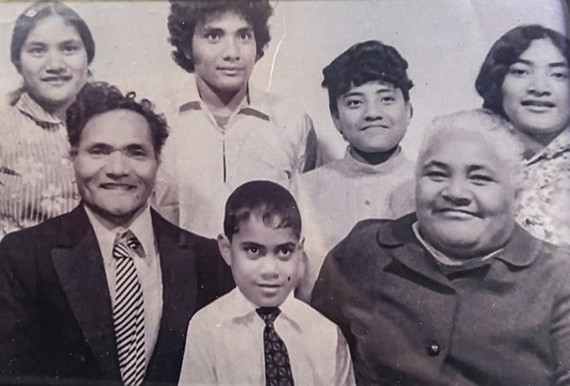
[left to right Sene, Grandad Sami, Enese, Tekihi, Maligi, Grandma Uaina, Atalana]
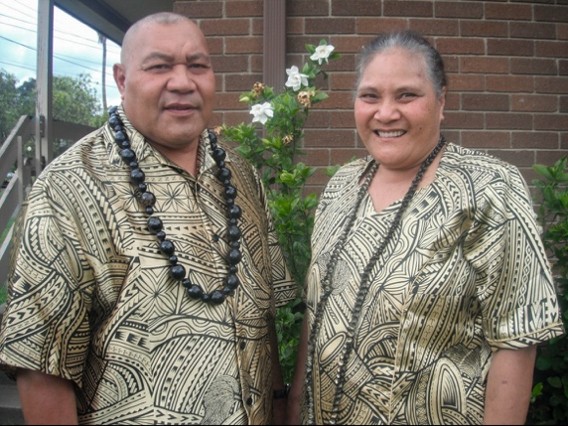
[Magele Silaumua (Dad) & Sene Laumua (Mum)]
Storytelling Through Tuluma
Storytelling has always been at the heart of what I do. Through photography and videography, I have the privilege of capturing moments that become part of our collective history. This passion is what first drew me to Tuluma. I wanted to see our culture and language documented in real time, ensuring that the stories of our people would not be lost. Working with Tuluma has allowed me to witness something special: our people coming together to celebrate, strengthen, and share the richness of Tokelau culture.
Embedded content: https://www.youtube.com/watch?v=Vm4BI_a8v3s
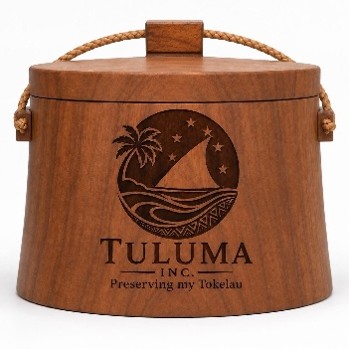
Tuluma was created out of love for the Tokelauan people. Based in Sydney, Australia, the charitable trust was established to ensure that Tokelauan cultural knowledge, language, traditions, stories, and identity are preserved and passed on to future generations. Through community-led initiatives, cultural education programmes, language revitalisation efforts, youth engagement, and heritage preservation activities, Tuluma seeks to strengthen connections between Tokelau people and their cultural roots.
Our organisation takes its name from the ‘tuluma’, a traditional carved fishing box used to store fishing hooks and personal items both at sea and at home. Like the tuluma itself, the organisation serves as a vessel for protecting and carrying the knowledge and stories of our people.
Celebrating Tokelau Language Day
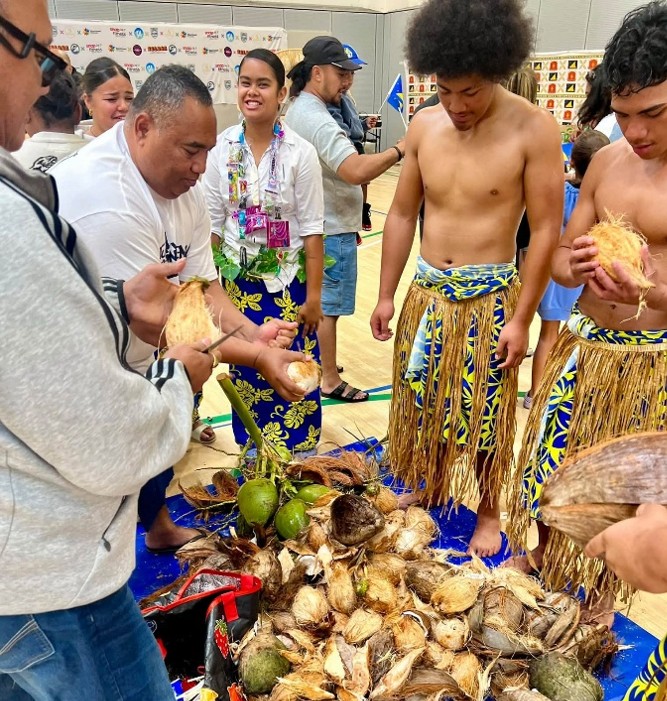
[Tavele Elia demonstrates the opening of a coconut to participants]
One of Tuluma's most significant achievements this year was organising and hosting Tokelau Language Day celebration in Sydney. Through community outreach and social media promotion, the event attracted more than 400 attendees. For me it was one of the most rewarding events I have been involved in because it represented everything we had been working towards. It was inspiring to see Tokelauans come together as one community and watch people of all ages proudly embrace their culture.
The event brought together cultural workshops, market stalls, performances, and special guests. Organisations such as the National Library of Australia and Te Vaka attended, creating opportunities for our community to engage with institutions that support the preservation of Pacific cultures and histories. Events like these provide spaces where our community can practise our culture, speak our language, share our stories, and ensure that Tokelau identity and heritage remain alive for generations to come.
Growing Through community workshops
Following the success of Tokelau Language Week celebrations, Tuluma launched a weekly community programme designed to strengthen cultural knowledge and language learning.
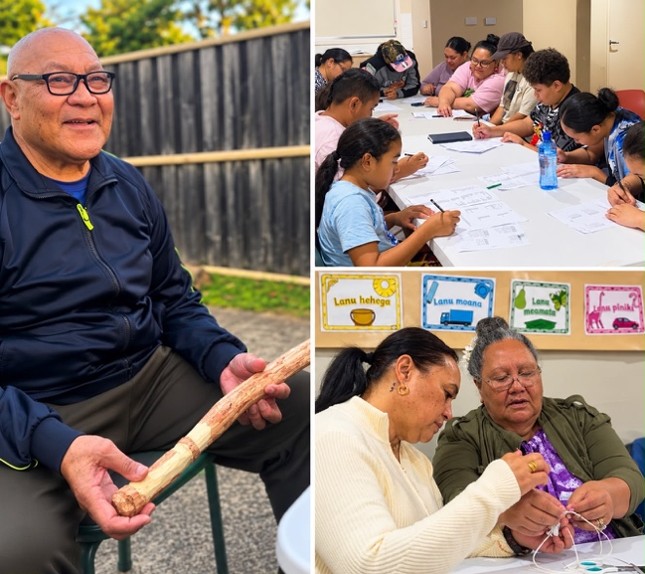
The programme includes weekly Tokelauan language classes taught by members of the Tokelauan community and former Tokelauan teachers. Participation has been strong, with learners ranging from five to fifty-two years old.
[Left: Magele Silaumua, bottom right: Dora Masi and Silifu Aluia, top left: participants learning numbers]
Alongside the language classes, carving and weaving workshops have also been introduced these sessions provide opportunities for community members to learn traditional weaving techniques, including making fans, flowers, and garlands, while also developing carving skills passed down through generations. For Tokelauans living in Sydney, these programmes offer practical ways to reconnect with their heritage, strengthen cultural knowledge, and build confidence in using Te Gagana Tokelau.
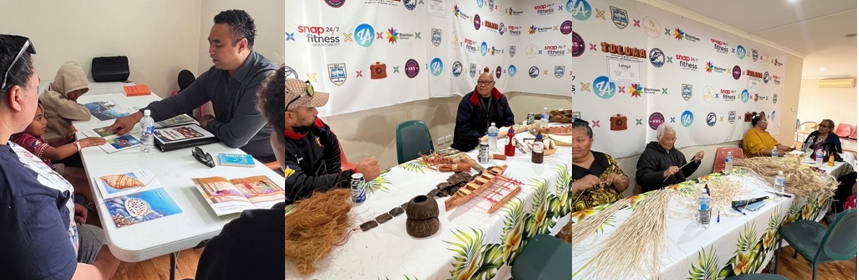
[Tuluma language, carving and weaving programmes]
The Importance of Relationships
For Tuluma, building meaningful relationships is essential to creating opportunities for the Tokelauan community. Over the past year, we have established strong partnerships with organisations including the Department of Foreign Affairs and Trade (DFAT), Digital Pasifik, the National Library of Australia, the New Zealand Consulate-General, Te Vaka, the Australian Museum, and Blacktown City Council. These relationships have enabled us to showcase Tokelauan culture, access valuable resources, and secure support for preserving and strengthening our cultural practices.
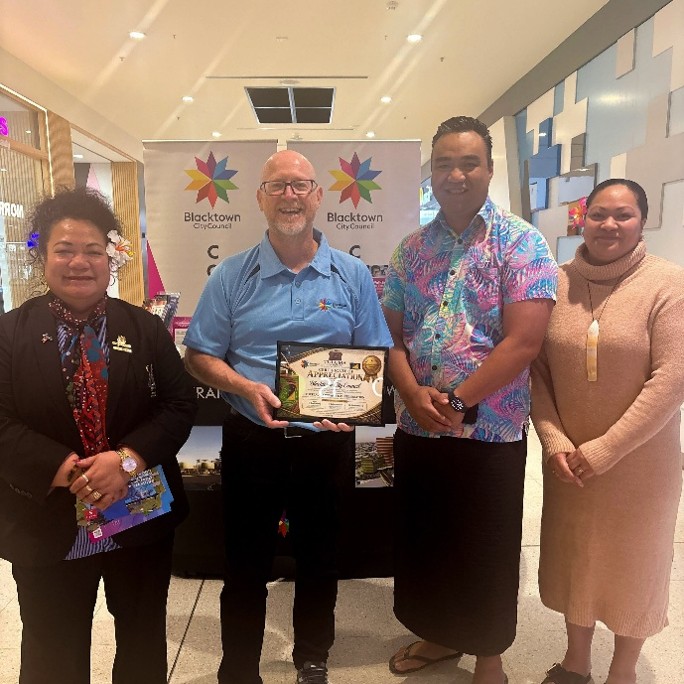
[Left to Right - Councillor Talia Amituanai, Mayor Brad Bunting, Palau Sinapati and Tausisi Sinapati]
One particularly significant partnership is with the National Library of Australia's Pacific Peoples of Australia Project. This initiative aims to ensure that Pacific stories, voices, and experiences are represented within Australia's national history. Through this partnership, the stories of Tokelauan people in Australia can be recorded, preserved, and shared for future generations.
For Tuluma, this means that the experiences, voices, and contributions of Tokelauans living in the diaspora become part of the national record, ensuring that our stories are not forgotten.
Our Responsibility to Future Generations
While Tuluma's mission is not new, it contributes to the ongoing and necessary work of sustaining Tokelau culture within the diaspora. Tokelau has one language, and with that comes a shared responsibility. Our role is not only to remember where we come from but to ensure that future generations know who they are, where they belong, and the cultural values that connect them to their homeland.
Our elders often remind us: "Always speak Te Gagana Tokelau or it could fade away" Their message is simple but powerful. If a language is not spoken, it can fade away.
Professor Jioji Ravulo echoes this sentiment when he says, "Our language will be forgotten if it is not in use”. Language it’s the heart of our culture. It shapes how we think, communicate, teach, and pass knowledge from one generation to the next. When language weakens, the foundations of culture become vulnerable. Living within increasingly westernised societies can make it easy for our language to be neglected, and over time this neglect can become normalised.
That is why initiatives such as Tuluma are so important. By creating spaces where people can learn, speak, and celebrate Te Gagana Tokelau, we help ensure that our language remains a living and thriving part of our identity.
Ko Tokelau ke ola!
The information on this site has been gathered from our content partners.
The names, terms, and labels that we present on the site may contain images or voices of deceased persons and may also reflect the bias, norms, and perspective of the period of time in which they were created. We accept that these may not be appropriate today.
If you have any concerns or questions about an item, please contact us.